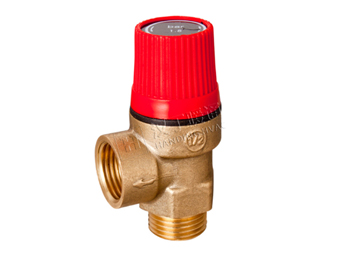
A safety valve is a key component in industrial and domestic systems, safeguarding equipment and people from over – pressure.
1. Definition and Concept
It’s an automatic pressure – relief device. When system pressure exceeds a pre – set limit, like in pressure vessels or pipelines, the valve opens. This releases excess pressure, preventing system damage from over – pressurization and potential disasters.
2. Working Principle
Safety valves work on the balance between system pressure and an internal force. Usually, a spring or weighted mechanism holds the valve closed under normal pressure. Once the pressure surpasses the set – point, it overcomes this force, opening the valve. The excess fluid is released until the pressure drops to a safe level, then the valve closes.
3. Structure Components
Inlet and Outlet Ports: The inlet connects to the pressurized system, and the outlet discharges excess fluid. Their size and design are based on system flow rate needs for efficient pressure – relief.
Valve Disc and Seat: The disc seals against the seat to keep the valve closed. When the set – point is reached, the disc lifts, allowing fluid flow. The seat provides a seal when closed and guides fluid when open.
Spring or Weight Mechanism: Springs are pre – compressed to keep the valve closed, with the compression degree determining the set – pressure. In weighted valves, the weight is adjusted for the desired set – pressure.
4. Types of Safety Valves
Spring – Loaded: The most common. They use a spring to hold the valve closed, and the spring force can be adjusted for the opening pressure. Popular for their simplicity, reliability, and easy adjustment.
Pilot – Operated: More complex, with a main and a pilot valve. The pilot senses system pressure and controls the main valve. Used in high – pressure and high – flow applications needing precise pressure – relief control.
Weight – Loaded: Use a weight on a lever or piston to keep the valve closed. Less common now, but still used in some specialized cases requiring a simple and reliable pressure – relief solution.
5. Application Fields
Industrial: Used in oil and gas pipelines, storage tanks, refineries, power plant boilers, steam turbines, and chemical plant reactors to prevent over – pressure – related explosions and leaks.
Domestic: Found in water heaters to prevent bursting from excessive pressure. Some high – pressure residential water supply systems also use them to protect pipes and fixtures.
6. Maintenance and Inspection
Regular maintenance and inspection are crucial. This involves checking valve components for wear and tear and testing the valve to ensure it opens and closes at the correct set – pressure. Some industries have strict regulations on the frequency, and non – compliance can lead to safety risks and legal issues.
7. Standards and Regulations
There are many national and international standards, like those from the American Society of Mechanical Engineers (ASME) in the US. These standards ensure safety valves are reliable in protecting against over – pressure hazards.
In summary, safety valves are vital for pressure – containing systems. Proper design, installation, and maintenance are essential for accident prevention and safety in both industrial and domestic settings.