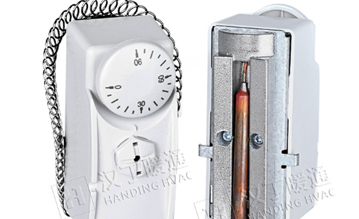
Yes, a thermostat closes when the temperature drops; as the temperature falls below the set point, the thermostat activates to turn on the heating system, essentially “closing” the circuit to allow heat to flow and raise the temperature back to the desired level.
Key points about how a thermostat works:
Function:
A thermostat senses the temperature and activates heating or cooling systems to maintain a set temperature.
Closing action:
When the temperature drops below the set point, the thermostat “closes” by activating the heating system.
Opening action:
Conversely, when the temperature rises above the set point, the thermostat “opens” to deactivate the heating system and potentially activate cooling.
How does a thermostat work?
A thermostat typically contains a temperature-sensitive element, such as a bimetallic strip or a thermistor. When the ambient temperature changes, this element responds. For example, a bimetallic strip consists of two different metals bonded together. As the temperature changes, the metals expand or contract at different rates, causing the strip to bend. This bending action is then used to open or close an electrical switch.
Does a thermostat close when the temperature drops?
In a heating thermostat, the answer is usually yes. When the temperature drops below the setpoint, the thermostat’s temperature-sensitive element detects this change. In the case of a bimetallic strip, it bends in a way that closes the electrical circuit, allowing power to flow to the heating system. This activates the heater, which then works to raise the temperature back to the desired level. However, in a cooling thermostat, the opposite occurs. When the temperature rises above the setpoint, the thermostat closes the circuit to turn on the cooling system.
What are the different types of thermostats?
There are several types of thermostats. The traditional mechanical thermostat, like the one with a bimetallic strip, is common in many homes. There are also digital thermostats, which use electronic sensors to measure temperature more precisely. These digital thermostats can often be programmed with different temperature schedules for different times of the day, providing greater energy efficiency. Additionally, smart thermostats are emerging, which can be controlled remotely via a smartphone app and can learn the user’s temperature preferences over time to further optimize energy usage.
Why is it important for a thermostat to be accurate?
Accurate temperature control is essential for both comfort and energy efficiency. If a thermostat is inaccurate and doesn’t close or open the circuit at the right temperature, it can lead to overheating or undercooling. This not only affects the comfort of the occupants but also wastes energy. For example, if a heating thermostat fails to close when the temperature drops, the room may remain cold, and the heating system won’t turn on, causing discomfort. On the other hand, if it closes too early, the heating system may run unnecessarily, increasing energy bills.
How can a thermostat be calibrated?
Some thermostats have a calibration adjustment screw or a digital calibration option. To calibrate a mechanical thermostat with a screw, a small screwdriver can be used to turn the screw slightly. Clockwise turns usually increase the temperature at which the thermostat activates, and counterclockwise turns decrease it. For digital thermostats, the calibration process may involve following a specific set of steps in the thermostat‘s menu, which can usually be found in the user manual. It’s important to note that calibration should be done carefully to avoid incorrect temperature settings.
In conclusion, the behavior of a thermostat when the temperature drops depends on its type and function. Understanding how thermostats work and how to maintain and calibrate them is essential for ensuring comfortable and energy-efficient temperature control in our living and working spaces.